




Humans need pigeonholes to order the world, and even in a subculture like the gothic scene people try to define themselves and others. The result is numerous funny or even serious illustrations floating around the internet that are supposed to explain gothic types. However, anyone who moves around the scene will quickly realise that all styles have more or less mixed over the decades. Nevertheless, goths orient their outfits to certain original types and to new influences. These are some of them:
Humans need pigeonholes to order the world, and even in a subculture like the Goth scene, people try to define themselves and others. The result is numerous funny or even serious illustrations floating around the internet that are meant to explain gothic types. However, anyone who moves around the scene will quickly realise that all styles have more or less mixed over the decades. Nevertheless, goths orientate themselves with their outfit on certain original types and on new influences. These are some of them:
New Romantic
Steve Strange, an art student and later the lead singer of the band Visage, is responsible for the New Romantics style. He was a fixture on the London club scene in the late 70s, hosting Bowie and Roxy Music nights. At the door of his Blitz Club, he only let through guests who wore the most outrageous outfit possible. David Bowie was the early model for this idea with his stage character Ziggy Stardust. If you watch the official video "Ashes to Ahes" by David Bowie, you will also discover Steve Strange and some other visitors to the club in typical New Romantic outfits. Make-up and outfits also play a big role in the videos of the band Visage (Visage, Fade to Grey).
The New Romantics came together because of fashion, even though they shared a similar musical taste of new wave, synth-pop and disco beats. Adam Ant and Boy George were among the famous representatives of this genre. One of the characteristic features was the visual blurring of the sexes. Incidentally, Adam Ant's romantic pirate look was created at the time by fashion designer Vivienne Westwood.
Extravagant, decadent and narcissistic - these were the characteristics with which the New Romantics were described in public and they were not particularly popular - neither in the press nor in society. Not even in the New Wave scene did they meet with great love, because they did not put the music in the foreground, but outfits and hairstyles.
Fashion, however, was far too superficial for the New Wave scene. There was talk of selling out New Wave and for the first time criticism of the commercialisation of the subculture was to be voiced. Not for the last time, because this criticism continues to this day. Today's visual offshoots of New Romantics are most likely to be found in Japanese subcultures like Visual Kei. However, fashion and makeup from back then still have an influence on the black scene today, which in this case allows for strong colours and romantic pageantry.
Waver
The Wavers were the dark faction of the musical subculture in the late 70s and early 80s. With them - in contrast to the New Romantics - it was the music that was in the foreground, although the outfit also played an important role. The Wavers exaggerated "bourgeois outfits" and thus put an ironic stamp on them. The tousled hairstyles of the 60s and 70s were further tousled to the point of absurdity in the New Wave and the sides were simply shaved out completely. Suit jackets were bought way too big and flapped around with the shirts and wide bloomers. The shoes were not only pointed, but insanely pointed with the pikes, and already the social dress norms were undermined. A clear demarcation. The make-up was equally striking. Not just a soft eyeliner, but thick black kohl line, far beyond the eye. No pretty made-up lips, but bright red smudged lipstick. The predominant colour was black, but there were also many colourful clothes. They wore oversized crosses, rosaries and esoteric symbols to exaggerate society's religious allegiance and to provoke.
In the 80s it was musicians like The Cure, Siouxsie and The Banshees, Anne Clark and Gary Newman who pointed out new visual and musical directions. Incidentally, Robert Smith of The Cure, the epitome of the waver, also wore white trainers and colourful shirts with far too large suit jackets in the early days.
Only later, when the scene gradually became gloomier, did Robert Smith switch completely to black. Together with the goths of the 80s, the wavers are still called oldschool goths today. It doesn't matter whether they were actually around in the 80s. What is meant is the styling.
Gruftis
Gruftis are what is largely associated with the term Goth. Gruftis looked like they were fresh out of a horror movie. However, the transitions between the types of the scene are fluid and the labels are only afterthought aids to grouping. There were no classifications at the time. It was in fact a single scene and most members did not even realise that they were forming a new subculture.
By the standards of the time, the Wavers seemed to take some getting used to. They were met with contempt, scepticism, incomprehension and caution. But the goths really scared society. They didn't want to provoke, they wanted to keep themselves completely apart and be left alone. With their outfit and make-up, the Gruftis referred to the depiction of vampires in the late 70s. "Dead make-up" is what they called it when they covered their faces with white make-up and painted their eyes into dark caves with black eye shadow. It had to be occult, as creepy and symbolic as possible. Their clothes were reminiscent of gowns and nuns' robes. They wore veils and black gloves like characters from gothic novels. The prototype for the goth is considered to be "Rat", for example, who was featured in a photo story in the youth magazine Bravo in the early 1980s.
Wavers were somewhat socially acceptable with their appearance, goths were not. This is how one could make a makeshift distinction. The musical contrast can also only be vaguely described. One could perhaps say that the wavers were more comfortable with synthesizers and also with lighter sounds, while the goths wrapped themselves in gloomy sounds and deep voices. But even that is only an attempt at differentiation.
EBMers
EBMers were also part of the scene as early as the 1980s, even if they were visually and musically distinct from goths and wavers. Their focus was on electronic body music (EBM), which was aggressive and electronically reminiscent of marching music with slogans. The roots of the music were in British industrial mixed with minimal electro. The vocals were actually more like bawling and reminiscent of military drill.
During the Cold War, electronic music was about combat and the military and war and terror. Accordingly, people also liked to dress in camouflage colours with boots and uniforms. The cool and threatening industrialisation was also a big theme. Technical progress was frightening because it seemed soulless. EBM music played with this - and so did its followers. Even their hair - styled into flattop hairstyles - was very angular and edgy. Machine parts served as symbols. The motto was: "Work, sweat and muscle power".
While DAF and Die Krupps were doing their thing with us in the early days, it was bands like Front 242, The Klinik or Nitzer Ebb that expanded the EBM genre. Bands like Skinny Puppy and Ministry were pioneers in America.
That the currents of the scene also inspired each other can be seen, for example, in Depeche Mode, who combined extravagant pop music and industrial sound, combined this with dark styling and sometimes stood on stage with a sledgehammer. An impressive example of the mix is the official video for "People are People".
Black romantic
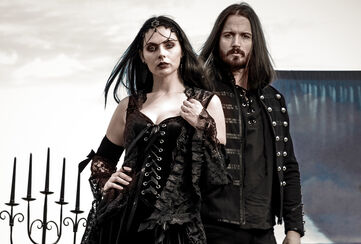
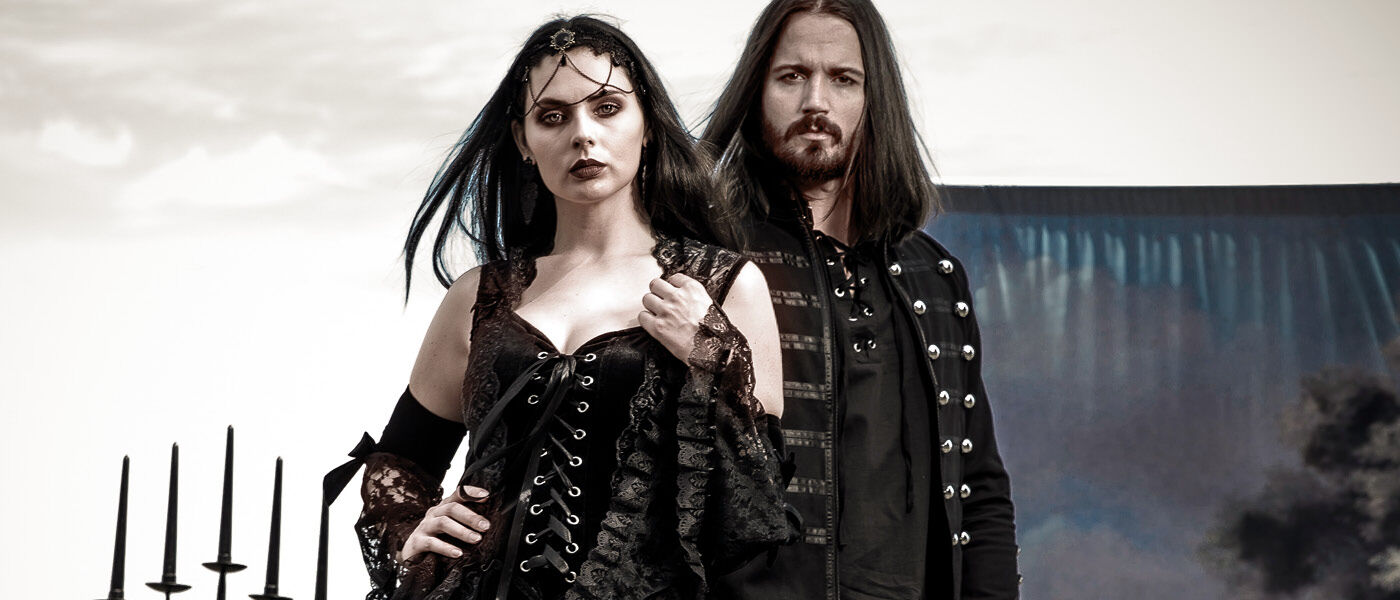
Many years after the Waver and the Gruftis experienced the beginning of the black scene, a new current emerged in the mid-90s. The Black Romantics entered the dark circle. They focused visually on the Victorian era or on romantic vampire films like "Interview with a Vampire". Many tailored their elaborate dresses true to the original. The unique pieces were handmade according to historical models. Not always, but often. Cienolines, bustles, puffed sleeves, hoop skirts, fans and bell skirts for the ladies, frock coats, uniform jackets, top hats, walking sticks and frilled shirts for the gentlemen. The Victorian Picnic has been an integral part of the biggest Gothic festival, the Wave Gotik Treffen in Leipzig, for several years and is very well known even outside the scene.
What is less well known is that the Black Romantics do not like it so much when people call their clothes a costume. For themselves, clothing is part of a nostalgic identity. It might be natural to assume that the historical clothing is in the theatre trove rather than in the normal wardrobe, but this assumption is wrong. Of course, there are always hangers-on, but the real Black Romantics live their outfits with heart and above all with soul, even those who are not skilled in tailoring. Their scene affiliation is shown, for example, by jewellery symbols, whitewashed skin, make-up and shoes.
Many black romantics wear the pikes of the early wavers. Their music, if you want to pigeonhole it, is more likely to be found in neoclassical, ethereal wave and pagan folk. Typical bands are Dead Can Dance or Faith and the Muse. But that doesn't mean that a Black Romantic doesn't also listen to The Cure or Nitzer Ebb. Again, the classification is only an attempt.
Batcaver
The Batcaver are the new-age punks of the black scene. Their origins lie in post punk and goth rock, with bands like the Virgin Prunes, the Sex Gang Children or Alien Sex Fiend and Specimen. They all performed at the famous Batcave club in London, which was the meeting place of the scene in the British capital in the early 80s. Visually, many typical punk elements were still to be found in post-punk, for example in style icon Siouxsie Sioux. Torn tights, fishnet shirts, safety pins, leather jackets, studs, buttons, boots.
Slowly, this style of dress disappeared from the black scene until it virtually rose from the dead in the mid-90s. Bands like Cinema Strange or Scarlet's Remains took to the stage. Their fans mixed their outfits from the original style, death rock and horror punk. The result was the typical Batcaver outfit in gothic punk style with deathhawk (a sinister variation of the mohawk), torn mesh, leather or suit jacket, patches, boots and eerie accessories. The Batcavers, however, are more known for paying homage to colourful horror - instead of thematising world-weariness and death - and for being anything but contemplative and introverted - punks, that is! Here, too, generalisations only serve as a rough classification.
Cyber Goth
How the cybergoth strayed into the black scene, no one really knows. Sometime after the turn of the millennium they were there, the neon-coloured figures with their plastic dreadlocks, bondage trousers and colourful bendy lights in their hands, with which they frantically waved on the dance floors. The whole thing was more reminiscent of techno and the raver scene. This is probably also the gateway to the black scene, which was musically heavily involved with technoid music genres in the 2000s and thus formed an intersection with the raver scene.
The cybers were eyed with scepticism and even hostility because they severely disrupted the beautiful Black retreat. They lacked any connection to the black scene and the goths couldn't do anything with the behaviour, the welding goggles, gas masks, mouth guards and garish neon colours. The typical industrial dance of the cybers fit in with EBM at best. The group dance, where the dancers lined up and flung their arms synchronously, met with complete incomprehension.
As the Goth scene tends to be defensive rather than offensive, the neon-coloured cybers were tolerated but ostracised. Gradually, cyber goth disappeared again from the black clubs. Even at the festivals of the black scene, there are hardly any representatives of this dance club end-of-time romanticism to be seen today. And if they do, they are (un)secretly smiled at and shunned. Individual style elements like the mouth guard or artificial dreadlocks can still be seen. But cybers have not been able to establish themselves in the black underground. Exceptions confirm the rule.
Steampunk
Steampunk is a variety of black romanticism. Here, however, Victorian clothing is not linked to gothic literature and vampire stories, but to fantastic stories and adventure novels - such as those by Jules Verne or H-G. Wells, or even with films like "Wild Wild West" with actor Will Smith.
Flying machines, steam engines, robots, rockets and computers touched on fantasy, horror and the Victorian Age. The result was an extremely creative new trend in the scene, which was able to establish itself with its outfits and especially its accessories and attention to detail. Nevertheless, there are significant differences to other sub-scenes. With their style, steampunks live a leisure culture with fun in dressing up and tinkering - almost like role-players. Their outfit does not necessarily serve to set themselves apart, but to entertain themselves.
But the steampunks revived the old do-it-yourself idea that used to prevail in the waver and goth scene and later among the black romantics. They impressed with self-made constructions, self-sewn clothes and enormous ingenuity. There were also musical points of contact here and there. In the meantime, the steampunks have formed a scene of their own with their own festivals, events and markets. Nevertheless, they can often be admired at large Gothic festivals, for example at the Victorian Picnic at the Wave Gotik Treffen in Leipzig.
Metal Goth
Whether the Metal Goth really exists? It's not quite clear, because many goths have found their way into the black scene through metal, but without changing much. Especially in the 90s, bands like Paradise Lost, My Dying Bride or Anathema brought them closer together. Death metal, death doom, gothic metal, gothic rock and neoclassical music mixed with other genres at festivals. Gothics and metal fans alike stood in front of the stage. There were intersections in clothing, attitude and music. Everyone was also familiar with death, the devil and theatrics. No one was scared of the other, even though both subcultures have different approaches to music. While the metal fans are extroverted and party loudly, the goths are more introverted.
In the course of the convergence of the subcultures, scene magazines unceremoniously declared softer bands like Nightwish, Within Temptation or Xandria to be Gothic Metal as well, and musicians offered the fan community further options with Symphonic Metal and Neue Deutsche Härte. The metal scene and the gothic scene have never really mixed, but nothing stands in the way of a mutual visit.
If you know a little and look closely, however, you notice that the subcultures differ. In metal, for example, the classic gender roles are more likely to be found than in the wavers or goths. There are also differences in behaviour and dance style. Here, too, clichés are of course only aids and not a law.
Medieval Goth
How did the medieval fan get into the black scene? I'm sure many have asked themselves that. Again, there wasn't THE day when medieval garb suddenly made its way into festivals. An attempt at an explanation:
Both parts of the black scene and medieval fans love the romantic view of the past and have a penchant for the fantastic and magical. Witches, for example, can be found in both areas. The medieval scene and the gothic scene love their retreats as a kind of escape from reality among like-minded people. Goths were a familiar sight at medieval markets at some point. They felt at home among knights, damsels, orcs, witches and wizards. At larp events, too, many goths changed their black garb for linen dress and became elves, witches, death incarnate or other characters in role-playing.
Finally, the medieval stalls and knights' festivals were unceremoniously brought to the festival grounds of the black scene. The pioneer is, for example, the Wave-Gotik-Treffen in Leipzig, which has had a permanent medieval market since 1992.
Musically, bands like Rammstein (Neue Deutsche Härte) and In Extremo (medieval rock) had a certain similarity. Bands like Faun, Corvus Corax or Subway to Sally also appealed to both scenes. So the medieval fans don't belong to the black scene at all. But there is a close bond and people respect each other.
Asian influences
The latest influences pouring into the scene are from Japan. Trends like manga, anime and cosplay are visual models. Here, however, mostly only the darker parts of Japanese subcultures spill over. From cosplay, i.e. the representation of characters from computer games, films or comics, the villains often make it. A big trend in the black scene was and is the horned headpieces of the dark fairy from the fantasy film MALEFICENT. The Lolita of another Japanese subculture becomes the Gothic Lolita in the Black Scene and plays with the look of Victorian porcelain dolls in a dark way. Visual Kei, the imitation of musicians from the JPop and JRock scenes, is also found in the Goth scene - here mostly as a fashion style.
Gothic trends
The black scene no longer consists only of oldschool goths, but has become a sometimes very colourful community of purpose over the last 40 years due to many influences. "Purpose" because not all sub-scenes like each other and distinct groups form at festivals that also go to very different concerts and events. Nevertheless, one accepts that big festivals only come about because a broad audience is addressed through the many sub-scenes.
The orderly confusion always produces new experimental styles: Pastel Goth, Health Goth, Commercial Goth, Plush Goth, Chic Goth, Fairy Goth, Fetish Goth, Hippie Goth - the varieties are endless. However, these are not real sub-scenes, but merely flaring hashtags in social media.
The fact is that due to the many influences in the black scene, the pigeonholes are actually all obsolete. There are still individual specimens of the defined groups, but on the whole, clothing styles, music genres, accessories, make-up and hairstyles mix wildly.